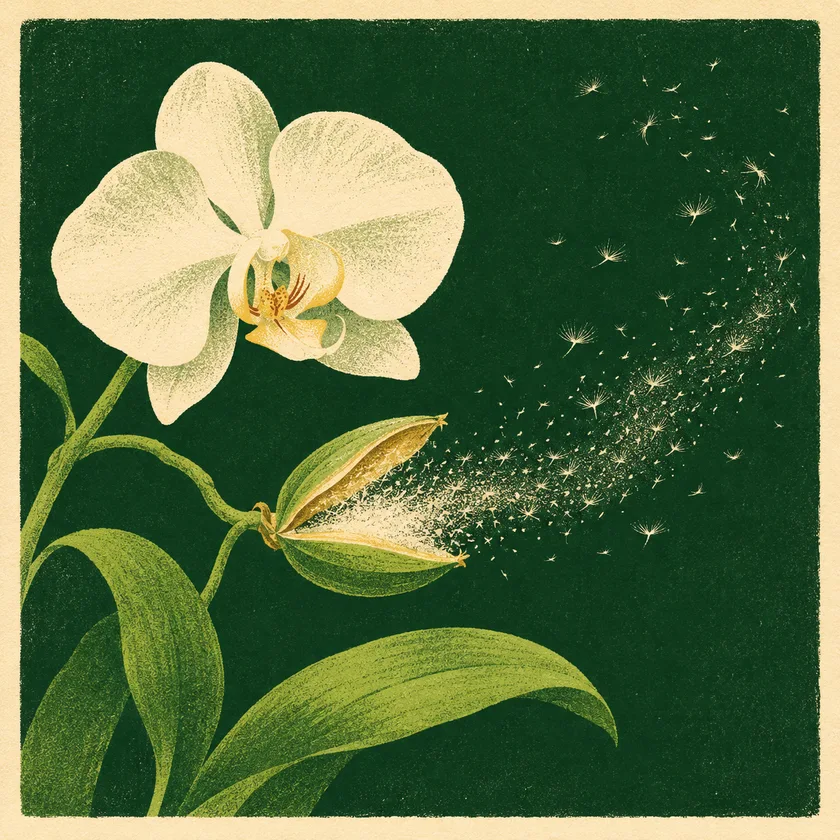
If you are used to handling beans, orchid seeds can look more like dust. These tiny seeds have few stored nutrients. In nature, many orchids rely on a fungal partner during germination.
In culture, orchid seeds can germinate on a suitable nutrient medium. A vessel of young orchids may therefore originate from seeds or from tissues of a selected mother plant. When sourcing plants, it is worth asking which.
A capsule full of possibilities
When an orchid capsule opens, its light seeds can travel on air currents. Landing in a crevice in bark is only the beginning. Moisture, a suitable surface and the presence of a compatible fungus can all influence the chances of early development.
Similar vessels, different origins
Seedlings can vary in their traits even when they come from the same capsule. For a grower following a cross, that variation is part of the attraction. Someone looking for a particular flower form will usually want plants propagated from a selected parent, with a record linking the batch to that plant.
Reading the label
Leaves and roots tell you about the current state of a young orchid, but they cannot show its future flowers in full. Ask how the plants were raised, about the parents of a cross or the source plant for a clonal batch. Those details make it easier to choose a plant that fits what you hope to see at its first flowering.
Contact Mekong Biofactory ↗